

What makes the best Lion's Mane supplement? It is not simply the highest milligram number, the most expensive bottle, or the boldest promise about brain health. A meaningful comparison starts with the mushroom itself: its species, source material, extraction method, ingredients, and supporting laboratory documentation.
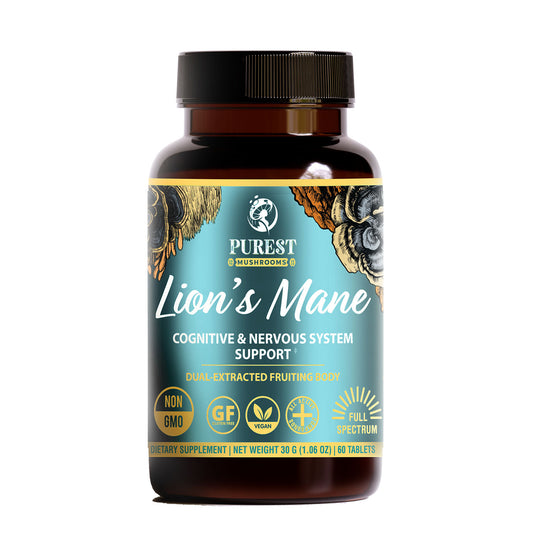
At Purest Mushrooms, our approach combines organic Lion's Mane fruiting-body extract, hot-water and ethanol dual extraction, direct-pressed tablets without added fillers or binders, and protective amber glass packaging.
In this guide, we explain what makes those choices meaningful, what researchers have actually discovered about Hericium erinaceus, and how to compare Lion's Mane supplements with confidence rather than relying on marketing hype.

What Is Lion's Mane Mushroom?
Lion's Mane (Hericium erinaceus) is an edible mushroom recognized by its distinctive white, cascading spines. It has a history of culinary and traditional use, particularly in parts of Asia, and has attracted growing interest from researchers investigating its naturally occurring compounds.
These compounds include polysaccharides, beta-glucans, hericenones, and erinacines. Researchers are exploring their biological activities, including potential relationships with nervous-system signaling and cognitive function.
However, not every compound occurs in the same concentration throughout the mushroom. The fruiting body, mycelium, and finished extracts may have different chemical profiles.
Understanding these differences is one of the most important steps in choosing a quality Lion's Mane supplement.
1. Fruiting Body vs. Mycelium: Know What You Are Buying
The fruiting body is the visible mushroom structure, while mycelium consists of the fine fungal filaments that grow through a substrate.
Both are legitimate parts of the fungal organism, and both have been studied. However, they are not interchangeable ingredients.
- Fruiting-body extracts: Made using the harvested mushroom structure. Their composition depends on growing conditions, processing, extraction, and testing.
- Mycelium preparations: Made from fungal mycelium, sometimes cultivated on grain or another substrate. Buyers should determine whether residual substrate is included.
- Combined preparations: May contain both materials or additional ingredients. Clear disclosure helps consumers understand the formula.
Some research has focused on compounds associated with Lion's Mane fruiting bodies, while other studies have investigated erinacine-enriched mycelium preparations. Findings involving one material do not automatically establish the same results for the other.
Purest's approach: Our Lion's Mane tablets use organic fruiting-body extract cultivated on hardwood, rather than a myceliated-grain ingredient.
We believe identifying the source material is essential to transparency. At the same time, fruiting-body content alone does not prove that one commercial supplement will produce better clinical outcomes than another.
2. Why Extraction Methods Matter
The extraction process is another important consideration when choosing a mushroom supplement.
Mushrooms contain compounds with different chemical characteristics. Water and ethanol have different solvent properties, meaning they can recover different groups of constituents depending on the extraction conditions.
Hot-Water Extraction
Hot water is commonly used to recover water-soluble mushroom constituents, including certain polysaccharides. The specific composition of the extract depends on temperature, extraction time, mushroom material, and other processing variables.
Ethanol Extraction
Ethanol can recover additional compounds with different solubility characteristics, including certain relatively ethanol-soluble constituents.
Dual Extraction
Dual extraction combines hot-water and ethanol extraction steps. This approach can recover a broader variety of naturally occurring mushroom constituents than either solvent may recover on its own.
Purest uses hot-water and ethanol dual extraction for its Lion's Mane tablets as part of our formulation philosophy.
Dual extraction is a meaningful processing distinction, but it does not automatically establish superior absorption, maximum potency, or better clinical outcomes. Those conclusions would require appropriate product-specific comparative research.
3. Understanding Beta-Glucans and Bioactive Compounds
Beta-glucans are naturally occurring polysaccharides found in mushrooms and several other biological sources. Different beta-glucans have different structures and biological properties, making accurate identification important.
Lion's Mane also contains other compounds of scientific interest, including hericenones and polysaccharides. However, the presence of a compound in a mushroom species does not establish how much of that compound is present in a particular finished supplement.
At Purest, we prioritize ingredient transparency, carefully selected mushroom extracts, and laboratory testing to help verify product quality and composition.
Rather than relying on a single percentage or broad potency statement, we encourage consumers to understand what a laboratory report actually measures.
When comparing supplements, consider these questions:
- Does the product identify beta-glucans separately from total polysaccharides?
- Which analytical methods were used?
- Does the test report identify the ingredient or finished-product sample?
- Are the measurements expressed clearly and consistently?
- Are the claims supported by relevant laboratory documentation?
Not all analytical measurements mean the same thing. For example, total polysaccharides and beta-glucans should not be treated as interchangeable values.
A well-documented product provides more useful information than an impressive number without a clear testing method or supporting report.
4. Lion's Mane, Cognition, and Nerve-Growth Research
One reason Lion's Mane has attracted scientific interest is its possible relationship with nervous-system biology.
Researchers have investigated compounds such as hericenones, associated with the fruiting body, and erinacines, certain forms of which have been studied in cultivated mycelium.
Some laboratory and animal experiments have reported changes in nerve-growth-factor signaling, neurite development, and other cellular processes.
These findings are scientifically interesting, but their limitations are important.
A result involving an isolated compound or an animal model does not establish that consuming a commercial Lion's Mane supplement will regenerate nerves, repair the brain, or prevent neurological disease in humans.
Similarly, research involving a specific mycelial preparation cannot automatically be applied to a fruiting-body extract.
Understanding the exact material used in scientific research helps prevent overstating what a finished supplement can do.
5. What Human Research Has Actually Found
Human research on Lion's Mane is developing, with several small clinical investigations examining cognitive function, mood, and related outcomes.
These studies provide reasons for continued investigation, but they do not establish reliable benefits for every preparation or population.
Mori et al. (2009): Mild Cognitive Impairment
A randomized, double-blind, placebo-controlled trial investigated Lion's Mane in 30 Japanese adults aged 50 to 80 with mild cognitive impairment.
Participants assigned to the Lion's Mane group received approximately 3 grams daily of a mushroom-powder preparation over 16 weeks.
The researchers reported improvements on their cognitive assessment during supplementation. Scores declined after supplementation stopped.
Although encouraging, the study was small, involved a specific population, and used a preparation different from Purest's dual-extracted tablets.
Read Mori et al. (2009), DOI: 10.1002/ptr.2634.
Docherty et al. (2023): Healthy Young Adults
A randomized, double-blind, placebo-controlled pilot study investigated 1.8 grams of Lion's Mane in 41 healthy adults aged 18 to 45.
The researchers evaluated outcomes after an acute dose and following a 28-day supplementation period.
They reported faster performance on one Stroop-task measure following an acute dose, alongside exploratory findings concerning stress and mood.
However, the study also reported less favorable results on some memory-related outcomes, including delayed word recall after the longer supplementation period.
Because this was a small pilot study assessing multiple outcomes, the findings should be considered preliminary and mixed rather than proof of broad cognitive enhancement.
Read Docherty et al. (2023), DOI: 10.3390/nu15224842.
Human Research Summary
| Study | Participants | Preparation | Main Takeaway |
|---|---|---|---|
| Mori, 2009 | 30 older adults with mild cognitive impairment | Approximately 3 g/day mushroom-powder preparation | Encouraging findings on a cognitive scale; larger studies needed |
| Docherty, 2023 | 41 healthy adults | 1.8 g/day, with acute and 28-day assessments | Mixed, preliminary findings across cognitive and mood outcomes |
Important scientific distinction: Neither study evaluated Purest's finished Lion's Mane tablets. Findings from these preparations should not be interpreted as proof of identical effects from a different supplement.
For broader background, the 2023 review of neurotrophic and neuroprotective research on Hericium erinaceus discusses laboratory, animal, and other research investigating the mushroom's constituents.
6. Lion's Mane Tablets, Capsules, and Powders Compared
Lion's Mane supplements are available in several formats. Each has practical advantages, but the physical format alone does not determine potency or effectiveness.
Tablets
Tablets provide convenient, pre-portioned servings. Depending on the manufacturer, they may contain binders, coatings, or other ingredients.
Purest's Lion's Mane tablets are direct pressed without added fillers or binders. They can be incorporated into a daily routine without a capsule shell.
Capsules
Capsules offer another convenient method of consuming pre-measured supplements. Their contents and capsule materials vary by manufacturer.
Consumers should review the full ingredient declaration rather than assuming that every capsule contains unnecessary fillers.
Powders
Powders are useful for mixing into drinks and recipes. Some products contain concentrated mushroom extracts, while others contain ground mushroom material.
Check the label to determine which type is being sold, how the serving is measured, and whether extraction was performed.
Mushroom Blends
Blends may combine several mushroom species or additional ingredients. Their labels should disclose enough information to identify the amount of each ingredient.
A proprietary blend that lists only the combined total may make it more difficult to determine how much Lion's Mane is present.
For a more detailed discussion, see our comparison of mushroom powders, tablets, and capsules.
7. What Makes Purest Lion's Mane Different?
Our goal is not to suggest that every other Lion's Mane supplement is inferior. Instead, we believe consumers should be able to evaluate specific, meaningful product attributes.
Purest's Lion's Mane formulation emphasizes:
- Organic fruiting-body extract: Our Lion's Mane source material is the mushroom fruiting body.
- Hardwood cultivation: The fruiting bodies are cultivated using hardwood-based growing material rather than marketed as a myceliated-grain ingredient.
- Dual extraction: Hot water and ethanol are used to recover constituents with different solubility characteristics.
- No added fillers or binders: The tablets contain Lion's Mane extract without added starches, grains, or capsule shells.
- Direct-pressed tablets: A convenient alternative to conventional capsules.
- Amber glass packaging: Selected to help protect the contents from light exposure.
- Laboratory testing: Testing and analytical documentation help evaluate composition and product quality.
Serving information: Each Purest Lion's Mane tablet contains 500 mg of mushroom extract. The labeled serving is two tablets, providing 1,000 mg of Lion's Mane extract. Each bottle contains 60 tablets, equivalent to 30 servings.
These characteristics describe the formulation. They do not constitute a guarantee of specific cognitive or medical outcomes.
Explore our Purest Lion's Mane Extract Tablets for current product details and availability.
8. How to Compare Lion's Mane Supplement Brands
Rather than assuming one manufacturer is superior in every category, compare the same objective information across products.
| Feature | Purest Lion's Mane | What to Check in Other Products |
|---|---|---|
| Species | Hericium erinaceus | Exact scientific identity |
| Source Material | Organic fruiting body | Fruiting body, mycelium, or mixture |
| Extraction | Hot-water and ethanol dual extraction | Method and supporting information |
| Other Ingredients | None listed | Binders, fillers, capsule materials, or other additions |
| Serving Size | 1,000 mg per two-tablet serving | Actual extract quantity per labeled serving |
| Testing | Laboratory testing to evaluate product quality and composition | Available COAs, testing methods, dates, and lot identity |
| Packaging | Amber glass bottle | Actual container and storage requirements |
Some competing products may share several of these characteristics. Others may use different materials, formulations, or manufacturing processes.
The key is to evaluate what is actually documented rather than accepting generalized claims about an entire category of products.
Country of origin alone does not establish whether a supplement is safe or contaminated. Appropriate sourcing records and contaminant testing provide more meaningful information.
9. Transparency, Testing, and Trust
A trustworthy supplement manufacturer should be able to identify its ingredients, explain its manufacturing approach, and provide appropriate documentation supporting measurable product claims.
Laboratory testing can help evaluate a mushroom extract's composition and potential contaminants. However, the value of any report depends on its scope and details.
A useful certificate of analysis may identify:
- The specific ingredient or finished-product sample
- The relevant lot or batch number
- The laboratory conducting the analysis
- The analytical methods used
- Measured compounds, where tested
- Contaminant testing results and applicable limits
It is also important to understand the difference between a report for a raw ingredient and one for a finished supplement.
At Purest, our emphasis is on transparent formulation choices and laboratory-supported product quality, rather than relying on broad statements such as "the world's most potent" or "clinically proven" without appropriate evidence.
Consumers should apply the same standard to every mushroom supplement brand, including Purest.
10. Safety and Practical Considerations
Lion's Mane is consumed as a culinary mushroom and is also sold in concentrated supplement forms. However, individual tolerance may vary, and food use does not automatically establish the long-term safety of every extract or dose.
Possible concerns include mushroom allergies and digestive discomfort. Research on interactions with medications and safety during pregnancy or nursing remains limited.
Anyone taking medications, managing a medical condition, preparing for surgery, or considering supplementation during pregnancy or nursing should consult a qualified healthcare professional.
Follow the product's current Suggested Use. A dose used in a clinical experiment should not automatically replace a commercial supplement's labeled instructions, especially when the preparations differ.
11. Buyer's Checklist: Choosing a Lion's Mane Supplement
Before purchasing a Lion's Mane supplement, use this checklist to evaluate the product:
- Verify the species. Look for Hericium erinaceus rather than a vague mushroom description.
- Identify the material. Determine whether the supplement contains fruiting body, mycelium, or a combination.
- Understand the extraction. Check whether the ingredient is extracted and which processing methods are disclosed.
- Review other ingredients. Look for binders, grains, sweeteners, coatings, or capsule materials.
- Check the labeled serving. Compare actual extract quantity per serving, not simply per bottle.
- Look for laboratory documentation. Confirm which properties have been measured and what the available reports support.
- Consider practical format. Choose tablets, capsules, or powder based on convenience and intended use.
- Compare value fairly. Consider price per labeled serving, ingredient identity, and documented quality.
The most useful supplement comparison is one that explains both the strengths of a formulation and the limits of the available evidence.
Frequently Asked Questions
What is the best Lion's Mane supplement?
There is no single supplement that has been conclusively established as the best for everyone. Look for transparent source material, a clearly described extraction process, an understandable ingredient list, appropriate testing, and a practical labeled serving.
Is fruiting-body Lion's Mane better than mycelium?
Not universally. Fruiting-body and mycelium preparations can contain different compounds, and scientific research has investigated both. Their composition, extraction, and testing are more informative than assuming one material always provides better results.
Is dual-extracted Lion's Mane more potent?
Dual extraction can recover constituents with different solvent properties. However, it does not automatically establish greater potency, absorption, or clinical effectiveness without relevant comparative testing.
How much Lion's Mane is in Purest tablets?
Each tablet contains 500 mg of Lion's Mane extract. The labeled serving is two tablets, totaling 1,000 mg. Each 60-tablet bottle provides 30 servings.
Do Lion's Mane supplements contain beta-glucans?
Lion's Mane contains fungal polysaccharides, including beta-glucans. The measurable amount in a finished product depends on its composition and analytical testing. Beta-glucans should not be confused with total polysaccharides.
Does Lion's Mane improve memory or concentration?
Some small human studies have reported favorable changes on selected cognitive measures. Other findings have been mixed, and the evidence is not sufficient to guarantee improvements in memory or concentration from commercial Lion's Mane supplements.
Are Lion's Mane tablets better than capsules or powders?
No delivery format is automatically superior. Tablets offer pre-portioned convenience, capsules provide another easy-to-use format, and powders offer flexibility for drinks and recipes. Ingredient quality, formulation, and testing remain important regardless of format.
Conclusion: Let the Details Speak
Lion's Mane is an intriguing mushroom with a growing scientific research literature. Its distinctive chemistry has encouraged investigations into cognition, nervous-system biology, and other areas, but human evidence remains limited and preparation specific.
Choosing a supplement should therefore involve more than a compelling health promise.
Purest's difference is deliberate: organic fruiting-body Lion's Mane, hot-water and ethanol dual extraction, direct-pressed tablets without added fillers or binders, laboratory-supported quality evaluation, and protective amber glass packaging.
We believe meaningful formulation choices deserve clear explanations, and that transparent evidence is more valuable than exaggerated claims.
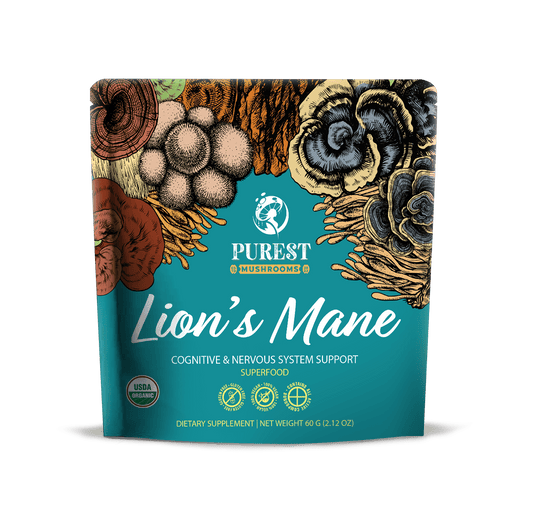
Explore Purest Lion's Mane: Compare our Lion's Mane Extract Tablets and Lion's Mane Extract Powder to find the format that best suits your preferences.
Research References
- Mori, K., Inatomi, S., Ouchi, K., Azumi, Y., & Tuchida, T. (2009). Improving effects of the mushroom Yamabushitake (Hericium erinaceus) on mild cognitive impairment: a double-blind placebo-controlled clinical trial. Phytotherapy Research, 23(3), 367-372. DOI: 10.1002/ptr.2634.
- Docherty, S., Doughty, F. L., & Smith, E. F. (2023). The Acute and Chronic Effects of Lion's Mane Mushroom Supplementation on Cognitive Function, Stress and Mood in Young Adults: A Double-Blind, Parallel Groups, Pilot Study. Nutrients, 15(22), 4842. DOI: 10.3390/nu15224842.
- Neurotrophic and Neuroprotective Effects of Hericium erinaceus. (2023). Review discussing the mushroom's constituents and selected experimental research. Read the review at PubMed Central.
Research disclosure: This article is published by Purest Mushrooms, a company selling Lion's Mane supplements. Scientific findings involving other preparations, isolated constituents, laboratory experiments, or animal models do not establish the effects of Purest's finished products. Product claims should be evaluated against current labeling and relevant manufacturing and laboratory documentation.
These statements have not been evaluated by the Food and Drug Administration. Purest's dietary supplements are not intended to diagnose, treat, cure, or prevent any disease.